

The Benefits of Turmeric
Table of Contents
What Is Turmeric?
Turmeric is a bright yellow spice made from the root of the Curcuma longa plant. People have used it for centuries in cooking, traditional medicine, and natural healing practices.
The main active compound in turmeric is curcumin, which gives the spice its color and many of its health benefits. Scientists widely study curcumin because it has strong antioxidant and anti-inflammatory properties.
Many people now use turmeric as:
-
A cooking spice
-
A herbal supplement
-
A natural remedy for inflammation and digestion
Major Health Benefits of Turmeric
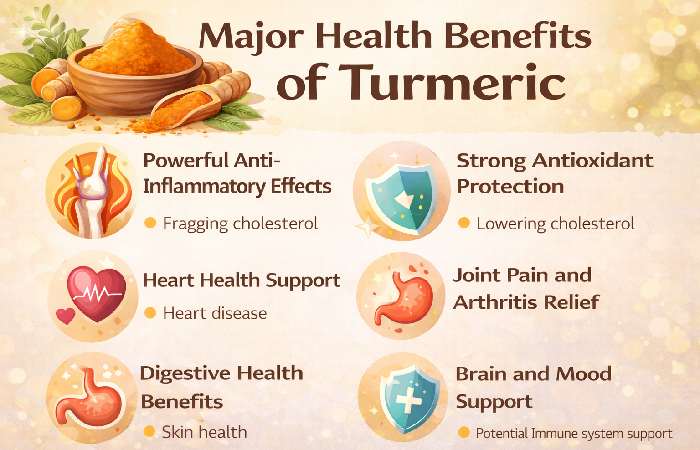
1. Powerful Anti-Inflammatory Effects
Inflammation plays a role in many chronic diseases. Curcumin helps reduce inflammation naturally and may ease symptoms of conditions like arthritis or joint pain.
Some studies even show effects similar to mild anti-inflammatory medications, though more research continues.
2. Strong Antioxidant Protection
Antioxidants protect the body from free radical damage, which contributes to aging and disease.
Curcumin neutralizes harmful molecules and helps boost the body’s own antioxidant defenses.
This may support:
-
Skin health
-
Heart health
-
Overall immune strength
3. Heart Health Support
Research suggests turmeric may help improve heart health by:
-
Lowering cholesterol
-
Supporting blood vessel function
-
Reducing inflammation linked to heart disease
These benefits make turmeric popular in heart-friendly diets.
4. Joint Pain and Arthritis Relief
Many people use turmeric for joint pain. Studies indicate curcumin may reduce stiffness and swelling in arthritis patients.
This makes turmeric a common natural supplement for:
-
Osteoarthritis
-
Rheumatoid arthritis
-
Muscle soreness
5. Digestive Health Benefits
Turmeric supports digestion by:
-
Stimulating bile production
-
Reducing gut inflammation
-
Helping with indigestion symptoms
Some people use turmeric tea or golden milk for digestive comfort.
6. Brain and Mood Support
Researchers continue exploring turmeric’s impact on mental health.
Early findings suggest curcumin may:
-
Improve mood balance
-
Support memory
-
Protect brain cells from oxidative stress
These effects show promise but need more clinical evidence.
7. Potential Immune System Support
Turmeric’s antioxidant and anti-inflammatory effects may help strengthen immune function.
People often include turmeric in:
-
Herbal teas
-
Health drinks
-
Functional foods
Skin Benefits of Turmeric
Turmeric also plays a role in skincare. Its antibacterial and anti-inflammatory properties may help:
-
Reduce acne inflammation
-
Improve skin glow
-
Calm irritation
Traditional skincare often uses turmeric masks, especially in South Asian cultures.
How to Use Turmeric Daily
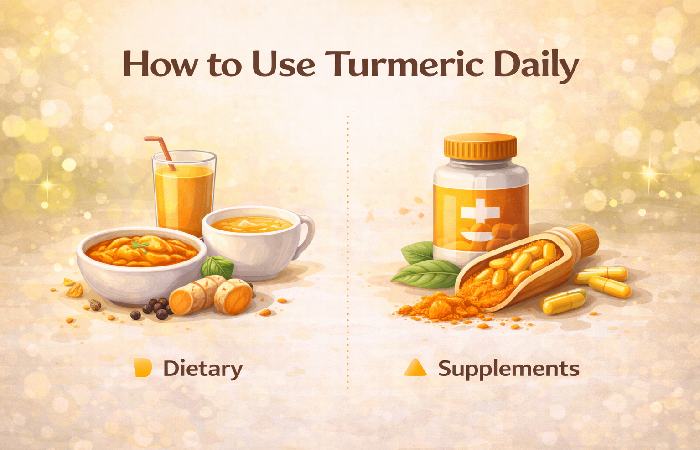
You can include turmeric in your routine in several ways:
Dietary Use
-
Add to curries, soups, or rice
-
Mix into smoothies or teas
-
Prepare golden milk
Supplements
Curcumin supplements offer higher concentration but should be taken responsibly.
Experts recommend combining turmeric with black pepper because piperine improves curcumin absorption.
Safety, Risks, and Side Effects
Turmeric is generally safe in moderate amounts, but excessive intake can cause issues.
Possible side effects include:
-
Stomach upset
-
Acid reflux
-
Interaction with medications
Rare cases of liver problems linked to supplements have also been reported.
Always consult a healthcare professional before taking supplements, especially if you:
-
Are pregnant
-
Take medications
-
Have chronic health conditions
Who Should Avoid Turmeric Supplements?
Turmeric may not suit everyone.
Avoid or consult a doctor if you:
-
Take blood-thinning medications
-
Have gallbladder issues
-
Experience digestive sensitivity
Food-based turmeric is usually safe, but supplements require caution.
Common Myths About Turmeric
Myth: Turmeric cures all diseases
Fact: It supports health but is not a cure.
Myth: More turmeric means better results
Fact: Excess intake can cause side effects.
Myth: Supplements work instantly
Fact: Benefits often require consistent, moderate use.
Practical Tips for Best Results
Here are some real-world tips:
-
Combine turmeric with black pepper
-
Use healthy fats for absorption
-
Choose trusted supplement brands
-
Avoid overconsumption
Personally, many people find turmeric helpful when used consistently in cooking rather than relying only on supplements.
Final Thoughts on the Benefits of Turmeric
Turmeric remains one of the most researched natural spices for health support. Its anti-inflammatory, antioxidant, and digestive benefits make it valuable for everyday wellness.
While it offers promising health benefits, turmeric works best as part of a balanced diet and healthy lifestyle—not as a miracle cure.
Using turmeric wisely can contribute to better overall health, improved digestion, and reduced inflammation over time.