

Microblading is a semi-permanent eyebrow enhancement technique that uses fine blades to deposit pigment under the skin for natural-looking hair strokes. It has become extremely popular because it saves time on makeup and creates fuller, well-defined brows. However, healing, risks, and proper aftercare are essential to a good result.
This guide will explain what microblading is, how the healing process works, common risks and how to avoid them, what aftercare steps really matter, how long results typically last, cost expectations, and answer the most common questions.
Table of Contents
What Is Microblading?
Microblading is a cosmetic tattooing technique that creates semi-permanent hair-like strokes in the eyebrow area, often called “brow embroidery” or “3D brows.” Unlike traditional eyebrow tattoos, microblading uses a handheld microblade tool to manually implant pigment into the upper layers of the skin (epidermis), resulting in lifelike strokes that mimic real hairs.
Microblading is not the same as a machine tattoo — it’s shallower and designed to fade more naturally over months to years. The depth of pigment placement affects longevity and healing. The typical microblading healing process including color changes and scabbing covers redness, tenderness, pigment lightening, and scabbing over the first 4–6 weeks.
Microblading vs Traditional Tattoo — Key Differences
| Feature | Microblading | Traditional Eyebrow Tattoo |
| Depth of pigment | Superficial → epidermis | Deeper in the dermis |
| Longevity | ~12–24 months | Years to permanent |
| Tool | Handheld blade | Tattoo machine |
| Look | Natural hair-like strokes | Blocky or solid color |
| Healing | Faster, lighter scabbing | Longer, heavier scabbing |
Microblading works best for those who want natural-looking brows without a permanent tattoo.
How the Healing Works
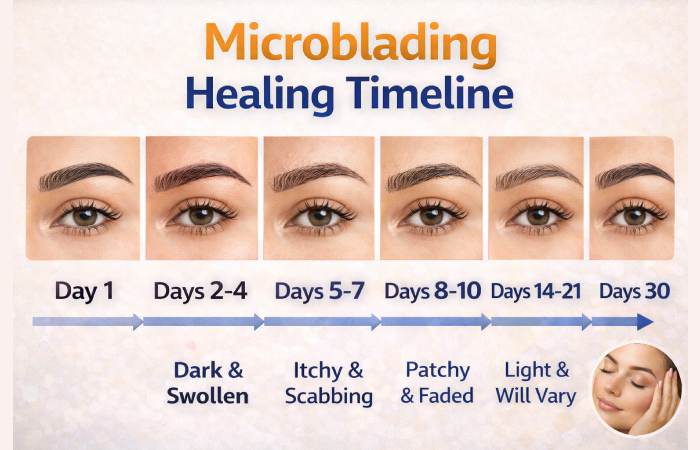
After your microblading session, your brows go through a few healing phases. Understanding this timeline helps you know what’s normal and what isn’t.
Day 1: Freshly Done
- Brows may feel tender, warm, slightly red
- Color looks bold and dark — this is normal
- Slight swelling possible
Explain to clients that the initial color is exaggerated but will fade significantly during healing.
Days 2–3: Scabbing Begins
- Minor dryness and flaking start
- Slight itching may occur
- Touching or picking can interrupt pigment retention
Do not pick! Picking can remove pigment and cause scarring.
Days 4–7: Flaking & Lightening
- Visible scabs flake off
- Color appears dull and light
- Brows might seem patchy
This is a critical phase — protect them from moisture and abrasion.
Weeks 2–4: Settling In
- Pigment starts to stabilize
- Color deepens to its final shade
- Skin texture smooths
By the end of 4 weeks, most of the surface healing is complete.
Month 1–2: Full Maturation
- Pigment continues to integrate into skin
- Final shape and tone become more predictable
- Touch-up appointment recommended at ~6–8 weeks
Many artists charge a separate fee for the touch-up — this session perfects any thin or uneven areas.
What’s Normal vs What’s Not
Normal during healing:
✔ Light dryness and flaking
✔ Mild redness and tenderness
✔ Color softening significantly
✔ Slight itching
Watch out for signs of infection:
❌ Intense pain
❌ Warmth spreading beyond normal
❌ Yellow/green discharge
❌ Fever or malaise
If symptoms of infection occur, seek medical advice promptly.
Risks and Complications — What You Should Know
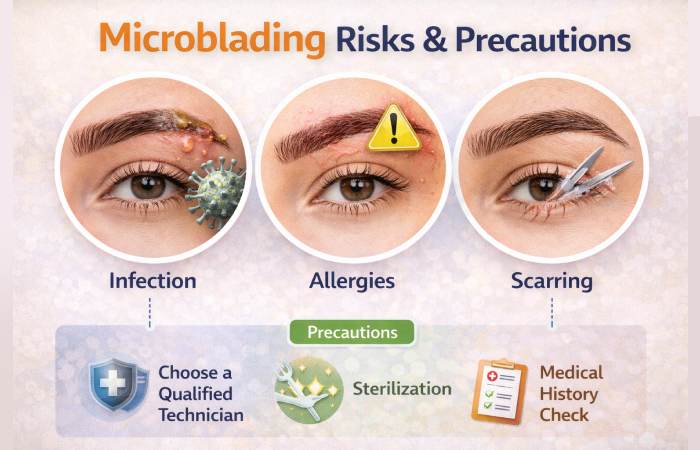
Microblading is generally safe when done by a trained, certified professional, but risks exist. These risks occur when:
- The artist lacks proper training
- Tools are not sterile
- Aftercare instructions aren’t followed
- You have sensitive or reactive skin
Because microblading breaks the skin, understanding the risks and safety aspects of microblading as a cosmetic tattoo procedure — including possible infection or allergic reactions — is important before booking.
Common Risks
Infection
Cause: Non-sterile tools, contaminated pigment, and unclean environment.
Prevention: Choose professionals who use single-use microblades, clean surfaces, and proper hygiene.
Incorrect Pigment Placement
Issues:
- Uneven strokes
- Incorrect depth → pigment blowout
- Uneven color fade
Choose certified technicians and always check before you commit.
Allergic Reaction
Although uncommon, pigment allergies can occur.
Tip: Ask for a patch test before your first appointment.
Scarring & Keloid Formation
People prone to keloid scars or with certain skin disorders should avoid microblading.
Aftercare — The Most Important Steps
Proper aftercare determines the final look. Follow these guidelines closely in the first two weeks:
Keep Them Dry (Except Gentle Cleaning)
Avoid:
- Water exposure
- Swimming
- Sauna, steam rooms
- Heavy sweating
Moisture can soften scabs prematurely and cause pigment loss.
Avoid Touching or Picking Scabs
This cannot be overstated. Picking leads to:
❌ Patchy brows
❌ Infection risk
❌ Scarring
Let flakes fall off naturally.
Apply Aftercare Ointment (if recommended)
Your artist might prescribe a light ointment like:
- Vaseline (if specified)
- A gentle healing ointment
Use sparingly — too much can clog pores and trap bacteria.
Follow exactly what your artist advises.
Sleep on a Clean Pillowcase
Clean linens reduce bacterial exposure. Avoid face-down sleeping.
Avoid Makeup & Harsh Products Nearby
No makeup, retinoids, exfoliants, or acids near the brow area for at least 10–14 days.
How Long Do Results Last?
Most microblading results last between 12 and 24 months, depending on:
- Skin type (oily skin fades faster)
- Sun exposure
- Lifestyle & aftercare
- Pigment quality
- Technique and depth used
A touch-up at ~6–8 weeks is recommended to perfect your brows. Many artists also offer annual refresh appointments.
Cost Expectations
The price of microblading varies widely by region and artist experience:
📍 United States: $300–$800
📍 Europe: €250–€700
📍 India: ₹4,000–₹15,000
Touch-ups may cost extra. Always ask for a full price breakdown before booking.
Who Should Avoid Microblading?
Microblading is not for everyone. Avoid it if you:
❌ Are you pregnant or breastfeeding
❌ Have active skin conditions near the brow area (eczema, psoriasis)
❌ Are prone to keloid scars
❌ Have recently had Botox or fillers near the brow area (wait recommended period)
❌ Are on certain blood thinners (consult a clinician)
Microblading vs Eyebrow Tattoo — Quick Overview
| Feature | Microblading | Eyebrow Tattoo |
| Technique | Hand bladed | Machine needle |
| Look | Natural hair strokes | Solid, tattooed look |
| Depth | Light, epidermal | Deeper dermal |
| Longevity | 12–24 months | Permanent |
| Pain level | Mild to moderate | Higher than microblading |
Sun & Environment — How to Protect Your Brows
UV exposure fades pigment faster. Wear:
Broad-spectrum sunscreen on healed skin
Hats for shade
Avoid direct sun in early healing
Common Mistakes Clients Make
❌ Skipping aftercare
❌ Picking scabs
❌ Not doing a patch test
❌ Choosing a cheap, inexperienced artist
❌ Exposing brows to water too soon
Avoid these mistakes for better results.
Expert Tips for Best Results
✔ Follow aftercare strictly
✔ Choose a certified, experienced artist
✔ Ask about sterile single-use tools
✔ Schedule your touch-up ahead of time
✔ Plan your appointment away from major events (avoid pressure to rush healing)
Frequently Asked Questions
Q: Does microblading hurt?
A: Most people report mild discomfort rather than pain; numbers are used.
Q: Can I get microblading if I have oily skin?
A: Yes — but oily skin may fade faster. Touch-ups may be needed sooner.
Q: How soon can I swim or shower normally?
A: Wait until scabbing is fully done (usually 10–14 days) before heavy water exposure.
Q: Can microblading be removed?
A: Yes — with laser removal or color correction by a professional.
Q: Can I shape my own brows afterward?
A: Yes — once fully healed, you can groom them, but avoid waxing near healing brows.
Final Conclusion — What Really Matters
Microblading can be an excellent way to enhance your eyebrows with natural-looking results, but its success depends heavily on expert technique and proper aftercare. Healing goes through predictable stages, and most discomfort, flaking, and color changes are completely normal if you know what to expect.
The key takeaways:
✔ Choose a reputable, certified artist
✔ Follow aftercare to the letter
✔ Avoid picking or early water exposure
✔ Expect bold color at first that softens with healing
✔ Plan a touch-up at ~6–8 weeks
✔ Understand risks and signs that need medical attention
With the right preparation, care, and expectations, microblading can give you the brows you’ve always wanted — with minimal hassle and great results.