
Health Benefits of an Earthen Pot – Earthen pots (clay pots, matkas, or handis) have been used for centuries to store water and cook food. They’re cheap, eco-friendly, and popular in many cultures. But what are the actual health benefits of an earthen pot — and what do you need to know to use one safely?
Table of Contents
In this guide, you’ll get:
- Practical benefits of using earthen pots for storing water and cooking
- How clay affects water temperature, taste, and minerals (what science and tradition say)
- Cooking benefits: nutrition, moisture, and flavour
- Safety warnings: glazing, lead risk, and how to choose safe pottery
- How to cure, use, and care for earthen pots
- A pros/cons table and FAQ for quick reference
What is an earthen pot?
An earthen pot is a vessel made from fired clay. There are two broad types used in food contexts:
- Unglazed clay pots — porous and breathable; often used for storing water (matkas) or for slow cooking (some regional styles).
- Glazed earthenware — clay covered in a glass-like coating (glaze) so it is non-porous; glazing can improve durability and make the pot dishwasher-safe, but may sometimes be a source of contamination if low-quality glazes (containing lead) were used in manufacture.
Unglazed pots are porous at a microscopic level — small pores allow water to slowly move through the clay surface, which drives one of the most commonly reported benefits: gentle, natural cooling of stored water.
Benefit — natural cooling: how and why it works
One of the clearest, measurable benefits: earthen pots naturally cool water. The clay is slightly porous; when water seeps to the outer surface, it evaporates. Evaporation uses heat energy from the water, so the temperature inside drops — the same principle that refrigerators and sweat cooling rely on.
People regularly report that water in a clay pot is 5°C (about 9°F) cooler than ambient temperature, depending on humidity and airflow — a simple, electricity-free way to keep healthdrinking water pleasantly cool in hot climates. This natural cooling is widely reported and forms the main practical reason many families store water this way.
Benefit – taste and mineral ‘infusion.’
Many people prefer the taste of water stored in clay pots — described as “clean,” “earthy,” or “fresh.” There are two reasons for this:
- Removal of chlorine smell / volatile tastes — porous clay and the slow turnover of water can allow some volatile compounds to dissipate, slightly softening the character of municipal water.
- Trace mineral content — certain clays contain tiny amounts of minerals (calcium, magnesium, iron, phosphorus). Over time, trace ions can migrate into stored water, subtly altering the mineral balance. Small mineral increases can alter taste and, in places with mineral-poor water, may provide tiny nutritional contributions. Multiple popular health write-ups note this effect and attribute improved taste and “mineral enrichment” to clay storage.
Important caveat: the mineral contribution is trace — not a substitute for a balanced diet or medical supplements. Don’t assume earthen pot water will supply significant nutrition.
Benefit — alkaline effect and digestive claims
Traditional systems (notably Ayurveda) and many modern articles claim that water stored in certain clays becomes slightly alkaline, which may help neutralize excess acidity for some people. Ayurvedic practitioners often explain clay’s “cooling” and alkaline qualities as beneficial for digestion and for balancing pitta (heat) in the body. Clinical science on this specific pH-shifting effect is limited. Some studies and reports suggest that small pH changes are possible, depending on the clay composition and water source. Still, robust clinical evidence that these changes affect health outcomes is sparse. So, a plausible traditional benefit with limited modern clinical proof. Use this idea cautiously and don’t substitute clay water for medical treatment of acid reflux or gastric disease.
Benefit — cooking in earthen pots: tenderness, moisture & nutrition retention
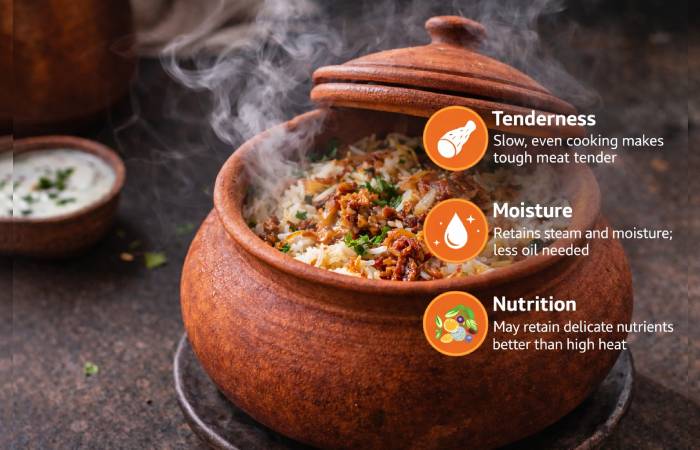
Cooking in an earthen pot (covered handi, clay kadai, tagine-style) changes how heat and moisture move through food:
- Slow, even heating: clay’s thermal behavior spreads gentle heat and retains moisture. Slow cooking makes tougher cuts of meat tender and allows flavours to meld without aggressive evaporation.
- Reduced need for added fat: because food cooks in its own steam and retains moisture, you may need less oil than with high-heat metal pans.
- Nutrient preservation: gentle heat and lower temperatures can help preserve some heat-sensitive nutrients (certain vitamins and volatile aroma compounds) better than high-temperature frying or grilling. The Indian Express and other food/health writers note that slow-cooking clay helps retain nutrients and gives a fuller flavour.
Again: earthen cooking is not a magic bullet — cooking methods, ingredients, and timings matter. But for stews, biryanis, slow braises, and legumes, a clay pot is a very practical, flavorful option.
Other practical benefits
- Eco-friendly & low energy: earthen pots are natural, often locally made, and avoid plastics. The cooling effect can reduce the need for refrigeration of drinking water in hot climates.
- Aesthetic & sensory: many cooks and diners enjoy the “earthy” flavour profile and rustic presentation.
- Affordability: In many regions, clay pots are economical compared with specialty cookware.
Safety first — glazing, lead contamination, and how to buy safely
This is the most important section. The benefits above apply to safe, well-made earthenware. Poorly made or old glazed pottery can be dangerous.
Lead and other contaminants
Historically, some glazes used lead to achieve bright colours and easier melting. If glazes are not fired correctly (or if old kilns contain residual lead), lead can leach into acidic foods or drinks. Lead is a potent neurotoxin (especially for children) and can cause developmental and health problems. Government agencies like the U.S. FDA provide clear warnings and Q&A on lead-glazed pottery and how it can contaminate food and drink. If you use glazed earthenware for food, make sure it’s certified and lead-free.
Practical purchase rules
- Buy food-grade, certified earthenware from reputable sellers. Look for certifications or “lead-free” claims backed by testing.
- Avoid very cheap, brightly painted pottery with an unknown origin.
- Avoid cooking highly acidic foods (tomato, vinegar) in unknown glazed pottery — acidity increases leaching risk. If you have antique pottery, have it tested before regular use. KitchenDemy and other safety guides emphasize testing and certification as the right approach.
How to test at home (basic checks)
- For water storage, fill the pot and let it sit for a day; if you see cloudy residue or a metallic taste, discard.
- A more dependable approach: ask the vendor for third-party food contact safety test reports or buy from trusted brands that document food-safety compliance. For older pieces, laboratory lead testing is the safe route.
How to prepare and care for a new earthen pot (practical steps)
If you buy a new unglazed clay pot and want to use it for water or cooking, follow these steps to reduce dust, make it durable, and ensure good results:
For cooking pots (seasoning/curing):
- Soak the pot in water for several hours (or overnight) before first use to reduce cracking and prime the clay.
- Some cooks recommend boiling rice water or a salt solution in the pot the first few uses to help seal pores naturally. (Traditional country tips vary.)
- Start cooking at low heat and increase gradually — avoid sudden temperature changes, which can crack clay.
- Use wooden or silicone utensils — metal can chip if the pot is fragile.
For water storage (matka/matki):
- Wash thoroughly with water and a soft brush; avoid harsh detergents for unglazed pots since they can be absorbed. Rinse well.
- Keep the pot covered to reduce dust/insect contamination.
- Change the water every 24–48 hours in hot weather; rinse the pot and scrub gently to remove any biofilm.
- Place the pot in a breezy spot to maximize evaporative cooling; avoid highly humid, stagnant air if you want the best cooling.
Simple care & cleaning tips
- Unglazed pots: avoid strong soaps; use hot water, a soft brush, and occasional baking soda soak to remove odours. Let dry fully before storing.
- Glazed pots: follow vendor care — many are dishwasher-safe, but check manufacturer recommendations.
- Storage: store in a dry area to prevent mould or microcracks; for long breaks, keep empty and upside down on a rack.
Quick reference table — Pros & Cons
| Pros | Cons / Cautions |
| Natural cooling of water (no electricity). | Risk of lead/contaminants in poorly glazed pottery; test or buy certified. |
| Earthy flavor and trace mineral enrichment. | Porous — requires careful cleaning to avoid biofilms. |
| Slow, moist cooking that can preserve nutrients and reduce oil use. | Fragile; can crack with thermal shock; needs gentle handling. |
| Eco-friendly and low-cost | Not a cure for disease — health claims should be cautious; not a substitute for clean water treatment if water is unsafe. |
What the science says
- The cooling effect of porous clay is a physical, measurable outcome (evaporation). This is well-understood and reported in practical guides and health writeups.
- Claims about pH shifting and digestive benefits are common in Ayurveda and popular articles; small pH changes are plausible, but clinical evidence that such changes yield measurable health outcomes is limited — so treat alkaline claims as plausible but not proven medical advice.
- Cooking in clay often preserves moisture and may retain heat-sensitive nutrients better than high-heat methods, which is plausible and supported by culinary science and nutrition trade press; however, precise nutrient comparisons depend on the recipe and cooking times.
- Safety: the greatest scientific and regulatory concern is lead leaching from old or poorly-made glazes — a documented risk covered by health regulators like the FDA; use tested, certified cookware.
Practical recipes & simple uses
- Matka water: Fill, cover with a cloth; place in shade with some airflow. Enjoy cool water for 24–48 hours. Change regularly.
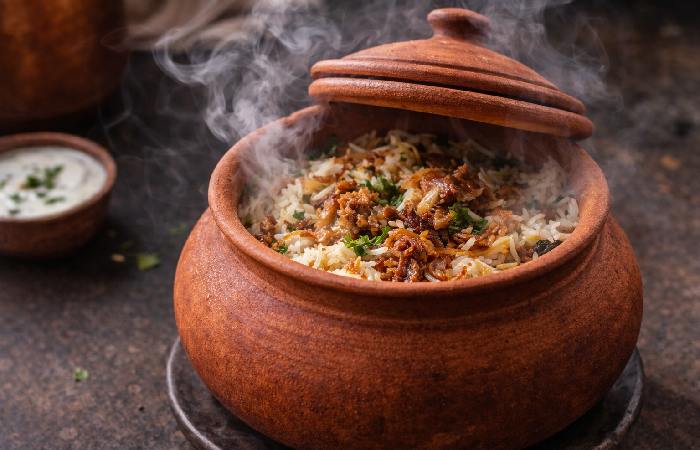
- Clay pot rice/biryani: Par-cook, layer spices, and slow-finish the rice in a sealed clay pot at low heat for tender grains and fuller aroma.
- Bean stew: Soak beans, add aromatics and stock, simmer in a clay pot for gentle, even cooking and rich flavour.
FAQ
Q: Is water from a clay pot safe to drink?
A: If the pot is unglazed, clean, and from a reputable source, yes — but change water often and clean the pot. If the pot is glazed, ensure it’s certified food-grade and lead-free.
Q: Do earthen pots add nutrients to food?
A: They can add trace minerals (calcium, magnesium) in tiny amounts, and the slow cooking helps preserve some nutrients — but they aren’t a substitute for a balanced diet.
Q: Can I cook tomatoes or vinegar-based dishes in clay pots?
A: Only cook acidic foods in certified lead-free glazed pots or unglazed pots known to be food-safe; acidic foods increase leaching risk from unsafe glazes. If uncertain, avoid acidic recipes.
Q: How do I test old pottery for safety?
A: Ask for lab testing or avoid using antiques for food; vendors sometimes provide food-safety documentation. The FDA has guidance about lead-glazed pottery.
How to choose a good earthen pot (buying checklist)
- Buy from reputable brands / local potters with food-grade claims.
- Prefer unglazed food-grade clay for water storage; prefer certified lead-free glazed pots for acidic cooking.
- Inspect for cracks, uneven glazing, or flaky paint.
- Ask the seller for safety test reports or certification, where available.
Final takeaway — practical, low-tech benefits with a safety caveat
Earthen pots offer real, practical benefits: natural cooling for drinking water, an enjoyable flavour, and slow, nutrient-retaining cooking that fits many healthy diets. They are eco-friendly and inexpensive. But the key is safe sourcing and care: avoid unknown glazed pottery for food, check for lead-free certification, and follow simple cleaning and usage rules. If you do that, an earthen pot is a lovely, healthy addition to your kitchen.