
Common Cold Symptoms vs Flu: How to Tell the Difference Quickly and Accurately
Many people confuse common cold symptoms vs flu because both illnesses affect the respiratory system and share similar early warning signs.
However, the difference matters.
Recognizing whether symptoms point to a cold or flu helps you:
- choose the right treatment approach
- understand recovery expectations
- reduce complications
- know when to seek medical care
- protect vulnerable family members
This guide explains the key differences clearly using medical comparison logic.
However, the difference matters. The CDC comparison between common cold symptoms vs flu explains that influenza usually causes systemic symptoms like fever and body aches, while colds mainly affect the upper respiratory tract.
Table of Contents
What Causes the Common Cold vs Flu?
Although symptoms overlap, the illnesses come from different viruses.
The common cold can be caused by more than 200 viruses, especially rhinoviruses.
The flu (influenza) is caused specifically by influenza virus types such as influenza A and B.
Because influenza viruses affect the body more aggressively, symptoms are typically stronger.
Common Cold Symptoms vs Flu: Quick Comparison Chart
| Symptom | Cold | Flu |
| Onset | Gradual | Sudden |
| Fever | Rare | Common |
| Body aches | Mild | Moderate to severe |
| Fatigue | Mild | Strong |
| Sneezing | Common | Sometimes |
| Headache | Rare | Common |
| Runny nose | Common | Sometimes |
| Chills | Rare | Common |
Flu symptoms generally appear faster and feel more intense.
Symptom Onset: The First Major Difference
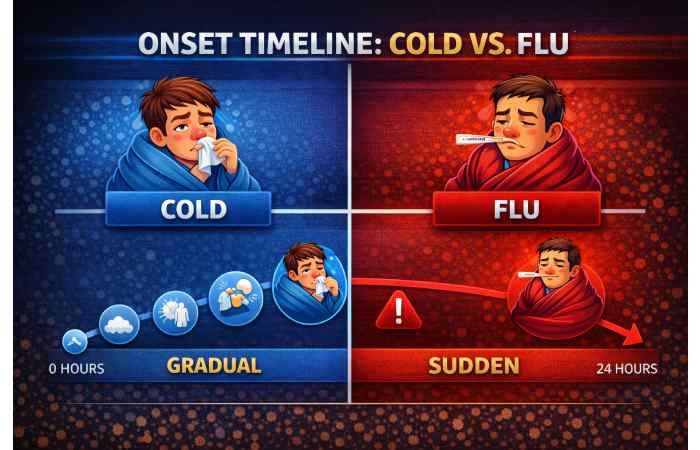
One of the easiest ways to distinguish common cold symptoms vs flu is how symptoms begin.
Cold symptoms usually:
develop slowly
start with sore throat
progress into congestion
Flu symptoms usually:
start suddenly
include fever early
cause immediate fatigue
Influenza symptoms often appear abruptly within hours rather than days.
Fever: A Key Clue in Cold vs Flu Identification
Fever is uncommon in adults with colds.
However, fever is one of the strongest indicators of flu infection.
Typical flu fever:
100–102°F (37.8–38.9°C)
lasts 3–4 days
Cold infections rarely cause sustained fever in adults.
Body Aches and Muscle Pain Differences
Body aches provide another strong diagnostic signal.
With a cold:
aches are mild or absent
With flu:
aches are common and often severe
Flu-related muscle pain can affect:
back
legs
arms
neck
These systemic symptoms are a hallmark influenza feature.
Fatigue Levels: Mild vs Severe Exhaustion
Fatigue severity helps distinguish the two conditions.
Cold fatigue:
mild
short-lived
manageable
Flu fatigue:
intense
long-lasting
sometimes disabling
People with influenza often feel too weak for daily activity during peak illness days.
Nasal Symptoms: Why Runny Nose Usually Means a Cold
Runny or stuffy nose appears more frequently with colds than flu infections.
Typical cold nasal symptoms include:
congestion
sneezing
post-nasal drip
Flu infections focus more on whole-body symptoms than nasal irritation.
Headache and Chills: Strong Flu Indicators
Headaches are rare in common colds but common in influenza cases.
Chills also appear more often with flu infections.
These symptoms suggest stronger immune activation.
Duration Differences Between Cold vs Flu
Cold symptoms usually last:
5–7 days
Flu symptoms typically last:
7–14 days
Fatigue from influenza may persist even longer after recovery.
Severity Differences: Why Flu Feels Worse Than a Cold
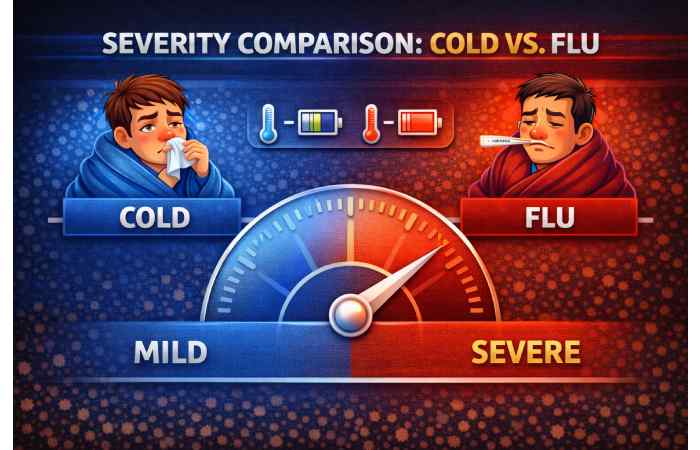
Flu affects the entire body.
Cold affects mainly the upper respiratory tract.
Influenza symptoms are typically:
stronger
faster
more disruptive
Cold symptoms are usually milder and rarely cause serious complications.
Common Cold Symptoms List
Typical cold symptoms include:
runny nose
stuffy nose
sore throat
sneezing
mild cough
mild fatigue
Symptoms usually develop gradually over several days.
Flu Symptoms List
Typical influenza symptoms include:
fever
chills
body aches
headache
severe fatigue
dry cough
sore throat
Children may also experience vomiting or diarrhea during flu infection.
Complication Risk: Another Important Difference
Colds rarely cause serious complications.
Flu can lead to:
pneumonia
sinus infections
ear infections
worsening chronic disease
Severe flu complications may require hospitalization in high-risk individuals.
Flu complications such as pneumonia and worsening chronic disease risk are documented in high-risk populations by the CDC influenza complications guidance.
Recovery Timeline Differences
Cold recovery pattern:
Day 1–2 sore throat
Day 3 congestion peak
Day 5 improvement begins
Flu recovery pattern:
Day 1 sudden onset
Day 2–4 severe symptoms
Day 7 gradual improvement
Fatigue may last weeks after flu recovery.
Expanded Symptom Interpretation Section: How to Tell Which Illness You Likely Have
Use this quick self-check logic.
Most likely cold if:
symptoms started slowly
runny nose dominant
no fever present
energy mostly normal
Most likely flu if:
fever present
body aches strong
fatigue severe
symptoms appeared suddenly
Medical testing confirms diagnosis when needed.
When Symptoms Could Be Something Other Than Cold or Flu
Sometimes symptoms resemble:
COVID-19
allergies
RSV infection
Testing may be necessary when symptoms overlap strongly.
Prevention Strategies for Cold vs Flu
Preventing both illnesses involves similar hygiene habits.
Effective prevention methods include:
handwashing
avoiding sick contacts
disinfecting surfaces
adequate sleep
hydration
Flu vaccination reduces influenza risk significantly.
When to See a Doctor
Seek medical attention if symptoms include:
difficulty breathing
persistent chest pain
confusion
high fever lasting several days
symptoms improving then worsening again
These may indicate complications.
Who Is at Higher Risk for Flu Complications
Higher-risk groups include:
older adults
young children
pregnant individuals
people with chronic disease
Early treatment improves outcomes.
Common Mistakes People Make When Comparing Cold vs Flu Symptoms
Avoid these errors:
assuming all fever means flu
ignoring sudden onset symptoms
underestimating fatigue severity
self-diagnosing without monitoring progression
Accurate interpretation improves recovery decisions.
FAQs About Common Cold Symptoms vs Flu
Can a cold turn into the flu?
No. They are caused by different viruses.
Is sneezing more common with cold or flu?
Sneezing is more common with colds.
Does flu always cause fever?
Most flu infections include fever.
Which illness spreads faster?
Both spread easily through respiratory droplets.
Which illness is more dangerous?
Flu carries higher complication risk.
Conclusion
Understanding common cold symptoms vs flu helps identify whether symptoms represent a mild upper-respiratory infection or a more serious influenza illness. Because flu symptoms typically appear suddenly and include fever, body aches, and strong fatigue, recognizing these warning signs early supports faster treatment decisions and better prevention of complications.