

Blood Test Results Explained – Getting your blood test report can feel overwhelming.
You see numbers, abbreviations, and ranges — but no clear answer to the most important question:
👉 “Am I healthy or not?”
Here’s the truth most people don’t realize:
Doctors don’t look at one number — they look at patterns, trends, and symptoms together.
In this guide, you’ll learn how to read your blood test like a professional, understand what high or low values actually mean, and most importantly, when you should (and shouldn’t) worry.
Table of Contents
How Doctors Actually Read Blood Test Results
Most people make this mistake:
👉 They check if a value is “normal” and stop there.
Doctors do something very different.
They look at:
- Multiple values together
- Your symptoms
- Your medical history
- Trends over time
Example:
- Low hemoglobin + fatigue → likely anemia
- Low hemoglobin + no symptoms → may not be urgent
👉 This is called clinical interpretation, and it’s the key to understanding your report.
Understanding “Normal Range” (The Biggest Misunderstanding)
Every report shows a reference range, but:
Important truths:
- “Normal” = average, not perfect
- Slightly outside range ≠ disease
- Inside range ≠ optimal health
👉 Your body is unique — ranges are just guidelines.
Medical research shows that reference ranges are based on the middle 95% of healthy people, meaning up to 5% of normal individuals can still have results outside the “normal” range without having any disease. Learn how blood test reference ranges are defined
Complete Blood Count (CBC): The Most Important Test
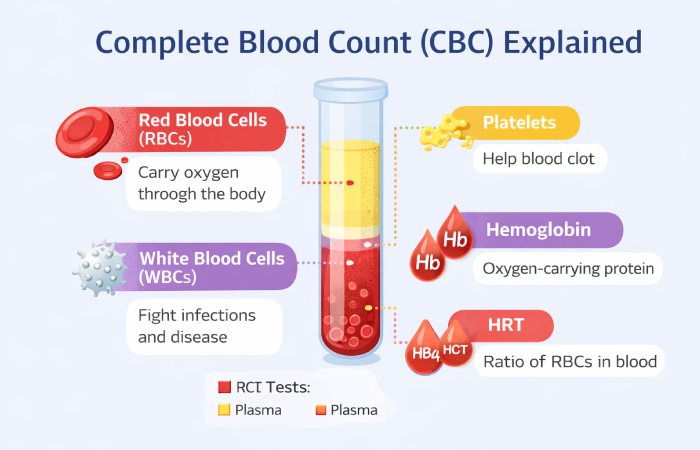
This is the most commonly ordered blood test.
It tells you about:
- Oxygen levels
- Immunity
- Infection
- Inflammation
Hemoglobin (Hb): Oxygen Carrier
Low Hemoglobin (Anemia)
What it means:
- Reduced oxygen delivery
Symptoms:
- Fatigue
- Shortness of breath
- Pale skin
- Weakness
When to worry:
- Hb < 10 g/dL
- Symptoms are present
Red Blood Cells (RBC)
Low RBC
- Iron deficiency
- Blood loss
High RBC
- Dehydration
- Smoking
White Blood Cells (WBC)
High WBC
Possible causes:
- Infection
- Stress
- Inflammation
👉 Mild elevation is common — not always serious.
Low WBC
Possible causes:
- Viral infections
- Immune suppression
Platelets
Low Platelets
- Bleeding risk
High Platelets
- Inflammation
- Chronic conditions
For context, global clinical references (including WHO-based guidelines) typically define normal hemoglobin ranges around 12–16 g/dL for women and 13–18 g/dL for men, though interpretation always depends on symptoms and overall health. Reference values for hemoglobin levels
Deficiency Markers You Should Never Ignore
Iron Deficiency (Most Common Worldwide)
Blood indicators:
- Low hemoglobin
- Low ferritin
Symptoms:
- Hair fall
- Fatigue
- Dizziness
👉 Early iron deficiency often shows symptoms before blood results become severe.
Vitamin B12 Deficiency
Key signs:
- Tingling in hands
- Brain fog
- Memory issues
👉 Unlike iron deficiency, B12 affects the nervous system.
Vitamin D Deficiency
Symptoms:
- Bone pain
- Low energy
- Weak immunity
Real-Life Case Example (SERP Advantage Section)
Case 1:
- Hb: 11.5 (slightly low)
- No symptoms
👉 Doctor action: Monitor, no immediate treatment
Case 2:
- Hb: 11.5
- Severe fatigue + dizziness
👉 Doctor action: Investigate iron deficiency
👉 Same number. Different interpretation.
Liver Function Test (LFT): What High Values Mean
Key markers:
- ALT
- AST
- Bilirubin
High levels may indicate:
- Fatty liver
- Alcohol damage
- Medication effects
👉 Mild elevation is common — trends matter more than a single result.
Kidney Function Test (KFT)
Key markers:
- Creatinine
- Urea
High levels may mean:
- Kidney stress
- Dehydration
👉 Always recheck before assuming kidney disease.
Cholesterol & Lipid Profile
| Marker | Meaning |
| LDL | Harmful cholesterol |
| HDL | Protective cholesterol |
| Triglycerides | Blood fats |
👉 High LDL + lifestyle factors = higher heart risk
The Most Important Section: When Should You Actually Worry?
You should take action if:
🚨 1. Multiple values are abnormal
🚨 2. You have symptoms + abnormal results
🚨 3. Results worsen over time
When You Should NOT Panic
Do NOT panic if:
- Slight variation in one value
- Temporary abnormal result
- No symptoms
> Many results normalize naturally.
Common Mistakes People Make
- Googling one value
- Self-diagnosing
- Ignoring symptoms
- Taking supplements blindly
How to Improve Your Blood Test Results Naturally
Diet
- Iron: spinach, red meat
- B12: eggs, dairy
- Vitamin D: sunlight + food
Lifestyle
- Exercise regularly
- Sleep 7–8 hours
- Reduce stress
Hydration
- Essential before testing
Quick Summary Table (High-Value SEO Section)
| Symptom | Possible Cause |
| Fatigue | Low Hb / Iron |
| Hair loss | Iron deficiency |
| Brain fog | B12 deficiency |
| Weak immunity | Low WBC / Vitamin D |
Who This Guide Is For
✔ People confused by lab reports
✔ Anyone with fatigue or unexplained symptoms
✔ Individuals tracking health markers
Who Should See a Doctor Immediately
🚨 Severe symptoms
🚨 Extremely abnormal values
🚨 Chronic health issues
FAQs
Can blood tests diagnose diseases?
No — they support diagnosis, not replace it.
Why do results change?
Diet, stress, and hydration can all affect results.
Should I repeat tests?
Yes, especially if results are abnormal.
Can deficiencies be reversed?
Yes — with diet, supplements, and lifestyle changes.
Final Conclusion
Understanding your blood test results explained properly can completely change how you approach your health. Instead of guessing or panicking, you can now interpret your results with clarity and confidence. Always remember — numbers alone don’t define your health, but patterns, symptoms, and consistency do.