

Meet the people behind this publication


Table of Contents
Quick summary — what you’ll learn
- What ceramides are and why they matter
- How ceramide moisturizers improve hydration and barrier function (evidence summary)
- Who benefits most and how to add one to your routine
- What to look for on the label and common ingredient pairings
- Image ideas, product suggestions, and FAQs
What are ceramides?
Ceramides are a class of lipid (fat) molecules naturally present in the outermost layer of the skin (the stratum corneum). Together with cholesterol and free fatty acids they form a lamellar (layered) structure that acts like mortar between the “bricks” (corneocytes). This lipid matrix is essential for retaining moisture and keeping irritants and allergens out.
How ceramide moisturizers work
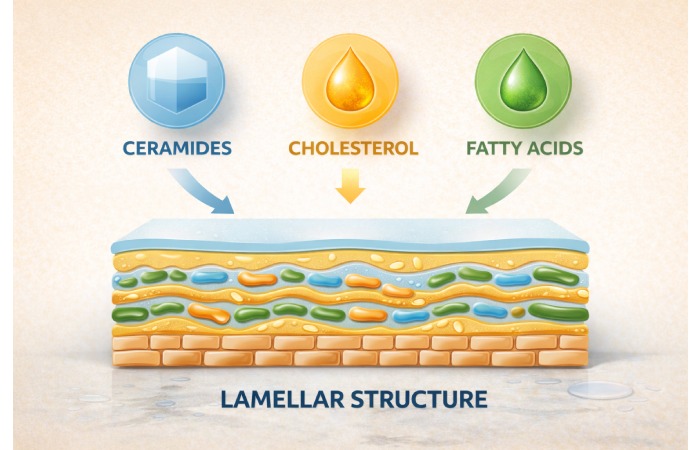
Topical ceramide products aim to supplement or replace lost skin lipids, helping restore the lamellar structure and reduce transepidermal water loss (TEWL). Multiple clinical studies and randomized trials show that applying ceramide-containing creams increases skin hydration and reduces TEWL — a direct measure of improved barrier function.
Clinical dermatology research confirms this effect — ceramide creams have been shown to improve hydration and barrier function in dry skin conditions: clinical study on ceramide moisturizers and barrier repair.
For example, randomized trials measuring stratum corneum lipids found that consistent use of ceramide moisturizers can increase measured ceramide content and improve clinical signs of dry, itchy skin. Similar studies in sensitive and barrier-impaired skin show improvements in hydration and a fall in TEWL after weeks of topical ceramide use.
Key evidence — 5 quick points
- Topical ceramide creams significantly increase skin hydration and lower TEWL compared with placebo or non-ceramide creams in clinical tests.
- Ceramide-containing formulations increase measurable ceramide levels in the stratum corneum and improve visible dry-skin signs (randomized, investigator-blinded studies).
- Pseudo-ceramides and ceramide analogs can absorb into the stratum corneum and contribute to normalized ceramide profiles; users show improved barrier measures and reduced scaling.
- Ceramide additives in sunscreen show additional barrier support: studies report increased hydration and reduced redness / TEWL when used daily.
- Specific ceramide formulations (e.g., Ceramide AD™) have shown promise in restoring barrier integrity after environmental or allergen damage in lab and small clinical settings.
Who benefits most from a ceramide moisturizer?
Ceramide moisturizers are helpful for a wide range of people, especially:
- Anyone with dry or dehydrated skin
- People with sensitive or reactive skin
- Those with eczema/atopic dermatitis (as part of a treatment plan)
- People starting retinoids or other actives that can temporarily increase irritation
- Anyone living in cold/dry climates or frequently in air-conditioned environments
You may also find these practical daily habits helpful: tips for healthy skin.
How to use a ceramide moisturizer — practical routine
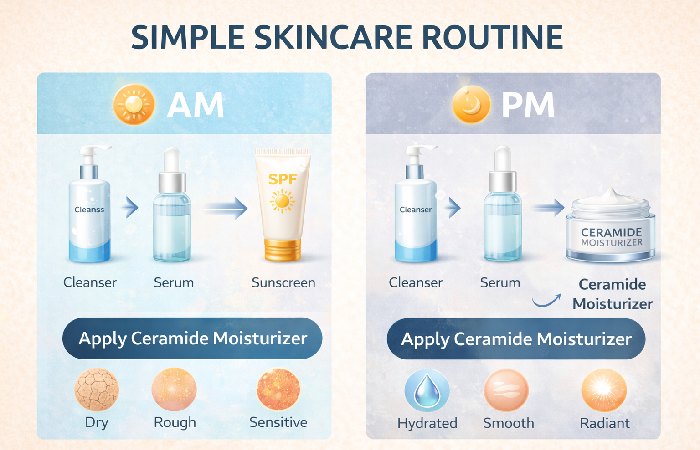
For best results, use your ceramide moisturizer on clean, slightly damp skin to lock in hydration:
If you’re building a full routine, this step-by-step guide can help: how to build a skin care routine.
- Cleanse with a gentle, pH-balanced cleanser.
- Tone/essence (optional) — hydrating toners or essences are fine beforehand.
- Apply serums (if any) — hyaluronic acid serums pair well with ceramides.
- While skin is damp (within a minute or two of washing), apply a pea-sized amount of ceramide moisturizer and spread gently. Damp skin traps moisture better.
- In the morning, finish with sunscreen; at night, ceramide creams are great final layers before heavier oils (if needed).
Tips: If you use strong actives (AHA/BHA, retinoids), apply ceramide moisturizer after your active and consider using it twice daily to help recovery and reduce sensitivity.
What to look for on the label (ingredients guide)
Not all “ceramide” products are the same. Look for:
- Named ceramides: Ceramide NP, Ceramide AP, Ceramide EOP, Ceramide NS — brands often list these by code. These are common skin-identical ceramide types.
- Lipid complement: Cholesterol and fatty acids (e.g., linoleic acid, phytosphingosine) — the classic lamellar mixture works best when all three lipid classes are present.
- Humectants: Hyaluronic acid, glycerin — hold water in the skin and pair well with ceramides.
- Occlusives/emollients: Squalane, petrolatum, dimethicone — these help seal in moisture. (Occlusives are handy at night or for very dry skin.)
- pH and preservative system: a stable, preservative-protected cream avoids contamination and maintains performance.
Common and effective ingredient pairings
Ceramides work especially well with:
- Hyaluronic acid — hydrates; ceramides lock the moisture in.
- Niacinamide — supports barrier function, reduces redness, improves tone.
- Cholesterol & free fatty acids — complements ceramides to rebuild lamellar structure.
- Gentle antioxidants (vitamin E) — help stabilize lipids and protect against oxidative stress.
Formats — creams, lotions, ointments — which to pick?
Choose based on skin type and needs:
- Light lotions/gels: good for normal to combination skin or hot climates.
- Rich creams: best for dry or mature skin, night use, or winter months.
- Ointments/petrolatum blends: greatest occlusion — ideal for very dry, cracked skin or for spot treatment.
How ceramide products fit into medical skincare
For conditions like atopic dermatitis or severe xerosis, dermatologists often recommend ceramide-rich emollients as part of daily skincare to maintain barrier health and reduce flares. Systematic dermatology reviews also report improved dry-skin symptoms and barrier function in atopic dermatitis when ceramide formulations are used regularly: review of ceramide therapy in eczema and barrier repair. Clinical programs sometimes pair topical steroids/anti-inflammatories with daily ceramide maintenance to prolong remission. Several clinical studies show measurable benefits in barrier metrics and symptoms when ceramide products are included.
Safety & side effects
Ceramide moisturizers are generally well tolerated. Because ceramides are skin-identical lipids, allergic reactions are rare. Some practical cautions:
- If your product contains fragrances, those can irritate sensitive skin — choose fragrance-free formulas if you have reactions.
- Patch test a new product on a small area if you have very reactive skin.
- When using with medical treatments (like prescription topical steroids or immunomodulators), follow your clinician’s guidance on layering and timing.
How to pick a trustworthy ceramide moisturizer n
- Look for clearly listed ceramide types (NP, AP, EOP etc.) rather than just “contains ceramides.”
- Prefer products listing cholesterol and fatty acids as well — that signals a multi-lipid approach.
- Choose fragrance-free if you have sensitive skin.
- Read user reviews for real-world performance (hydration & texture feedback).
- For medico-dermatologic needs, ask your dermatologist about recommended brands and prescription emollients.
Product suggestion categories
- Best budget option: an accessible ceramide lotion or cream for everyday use.
- Best for very dry skin: rich ceramide cream or ointment formula with occlusives.
- Best for sensitive skin: fragrance-free, minimal ingredients, clinically tested ceramide creams.
- Best lightweight option: ceramide serum or gel for layering under sunscreen/makeup.
Before & after expectations — timeline
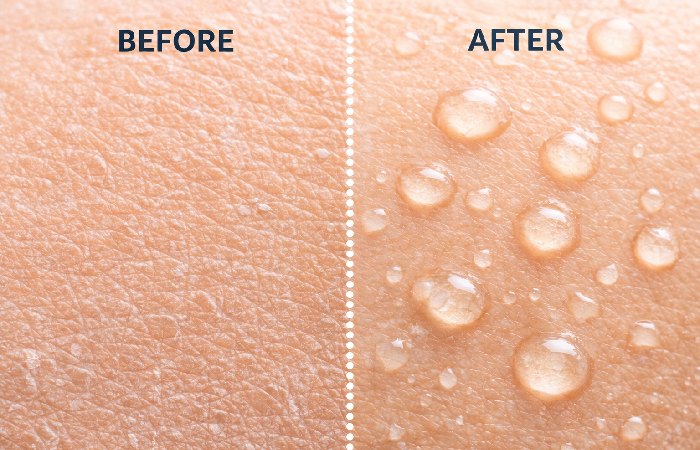
Clinical studies show measurable increases in hydration and reduced TEWL in days to weeks, with more robust barrier remodeling and symptom improvement at 2–4 weeks of regular use. For chronic dryness or eczema, consistent daily use is key to sustained improvement.
FAQs
Q: Are ceramide moisturizers safe for acne-prone skin?
A: Yes — ceramides themselves are non-comedogenic and help repair barrier function that sometimes worsens acne. Choose a lightweight, non-oil-heavy formula if you are oily or acne-prone.
Q: How often should I use a ceramide moisturizer?
A: Twice daily is common (AM + PM). In very dry conditions, apply after every wash and consider a richer night cream.
Q: Can I mix ceramides with retinoids or AHAs?
A: Yes — ceramides can reduce irritation from retinoids and acids. Use your active (retinoid/AHA) first, allow absorption, then apply ceramide moisturizer to calm and protect the skin.
Q: Do I need a prescription for ceramide moisturizers?
A: Most ceramide moisturizers are over-the-counter. For severe atopic dermatitis, dermatologists sometimes recommend prescription emollients or adjunctive therapies — consult your clinician for a personalized plan.
Final thoughts
Ceramide moisturizers are an evidence-backed, low-risk way to support skin barrier health and hydration across most skin types. Whether you have dry, sensitive, aging, or acne-prone skin, a well-formulated ceramide product — ideally combined with cholesterol and fatty acids — can make a measurable difference in comfort and appearance. Start with a fragrance-free formula if you’re sensitive, apply to damp skin, and give the product 2–4 weeks for full benefits.