

Sunscreen SPF 50
If you’re searching for SPF 50 sunscreen, chances are you want strong sun protection without harming your skin. Whether it’s for daily use, beach days, or preventing tanning and aging, SPF 50 is one of the most recommended choices by dermatologists worldwide.
I’ve personally tested and reviewed multiple sunscreens over the years, and SPF 50 consistently stands out for balanced protection and usability.
Let’s break it down clearly.
Table of Contents
What Is Sunscreen SPF 50? (Clear Definition)

Sunscreen SPF 50 is a sun-protection product that blocks about 98% of UVB rays, which are primarily responsible for sunburn and long-term skin damage.
Simple definition:
Sunscreen SPF 50 protects your skin from harmful UV rays and reduces the risk of sunburn, premature aging, and skin cancer.
It doesn’t mean you can stay in the sun forever—but it significantly reduces damage when used properly.
Why Do People Choose Sunscreen SPF 50?
Most users search for SPF 50 because they want:
-
Higher sun protection
-
Reduced tanning and pigmentation
-
Prevention of wrinkles and dark spots
-
Protection for sensitive or acne-prone skin
-
Safe daily sunscreen for face and body
SPF 50 is often the sweet spot—strong protection without the heaviness of higher SPFs.
Who Should Use Sunscreen SPF 50?
Sunscreen SPF 50 is ideal for:
-
People with sensitive or fair skin
-
Those prone to hyperpigmentation or melasma
-
Outdoor workers or travelers
-
Individuals using retinol, acids, or acne treatments
-
Anyone serious about anti-aging skincare
From my own routine, SPF 50 works best for daily wear because it offers protection without making skin feel greasy—if you choose the right formula.
Who Should Avoid or Be Cautious?
While SPF 50 is generally safe, caution is needed if you:
-
Have allergies to chemical filters
-
Experience breakouts with heavy sunscreens
-
Have extremely oily or fungal acne-prone skin
In such cases, opt for mineral (physical) SPF 50 with zinc oxide or titanium dioxide.
Benefits of Sunscreen SPF 50
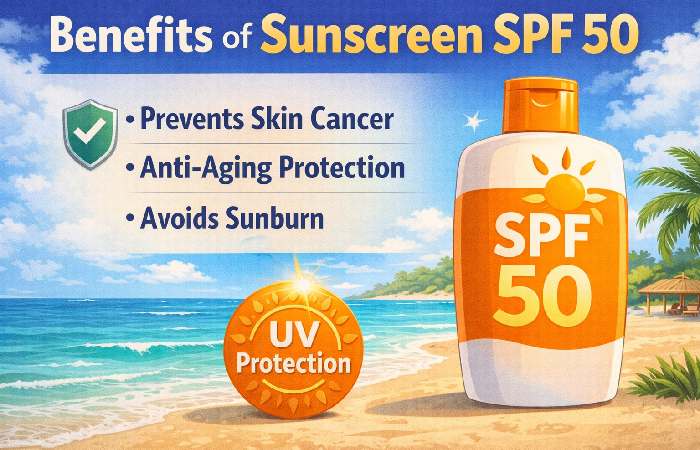
Here’s why SPF 50 is widely recommended:
-
Blocks ~98% of UVB rays
-
Helps prevent sunburn and tanning
-
Reduces premature aging signs
-
Protects against pigmentation and dark spots
-
Supports skin barrier health
-
Suitable for daily and outdoor use
Consistent use makes a visible difference in skin tone and texture over time.
Drawbacks of Sunscreen SPF 50
No sunscreen is perfect. Possible downsides include:
-
White cast (especially mineral sunscreens)
-
Heavier texture in some formulas
-
False sense of “all-day protection”
-
Needs reapplication every 2–3 hours
These issues are manageable with the right product choice and usage.
Common Mistakes People Make
I see these sunscreen mistakes constantly:
-
Applying too little product
-
Skipping reapplication
-
Using SPF only outdoors
-
Ignoring neck, ears, and hands
-
Relying on makeup SPF alone
Remember: Even the best SPF 50 won’t work if used incorrectly.
Myths vs Facts About Sunscreen SPF 50
| Myth | Fact |
|---|---|
| SPF 50 blocks 100% UV rays | It blocks about 98% |
| SPF 50 is too heavy | Depends on formulation |
| Dark skin doesn’t need sunscreen | Everyone needs sunscreen |
| One application lasts all day | Reapplication is necessary |
Understanding this helps set realistic expectations.
How to Use Sunscreen SPF 50 Correctly (Step-by-Step)
-
Cleanse and moisturize your skin
-
Apply sunscreen as the last skincare step
-
Use two finger-lengths for face and neck
-
Apply 15–20 minutes before sun exposure
-
Reapply every 2–3 hours outdoors
This is the exact method dermatologists—and I—follow.
Chemical vs Mineral SPF 50: Which Is Better?
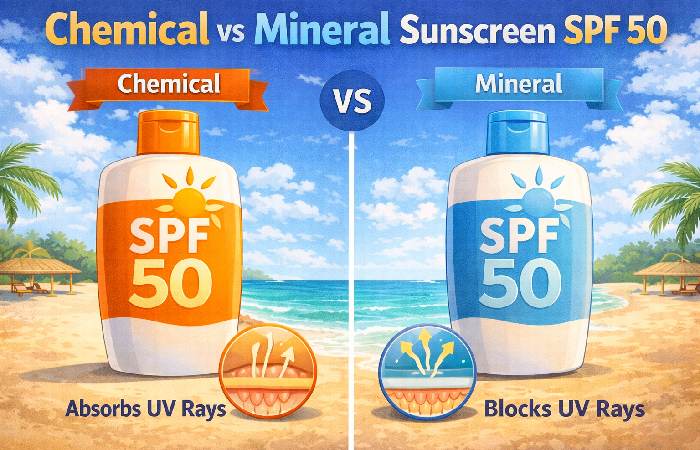
| Type | Best For |
|---|---|
| Chemical SPF 50 | Lightweight, no white cast |
| Mineral SPF 50 | Sensitive, acne-prone skin |
Both work well—choose based on skin type, not trends.
Real Experience & Practical Tips
From personal testing and research:
-
Gel sunscreens work best for oily skin
-
Cream-based SPF 50 suits dry skin
-
Tinted SPF 50 helps with pigmentation
-
Always double cleanse at night
Consistency matters more than brand hype.
Is Sunscreen SPF 50 Safe for Daily Use?
Yes. Dermatologists globally recommend daily SPF 30–50 for long-term skin health. Daily SPF 50 use helps prevent cumulative sun damage—even indoors.
FAQs (Snippet-Ready)
Is sunscreen SPF 50 good for daily use?
Yes, SPF 50 is safe and effective for everyday protection.
Does SPF 50 prevent tanning?
It significantly reduces tanning but doesn’t block it 100%.
Can oily skin use sunscreen SPF 50?
Yes, choose gel or oil-free formulas.
How often should SPF 50 be reapplied?
Every 2–3 hours during sun exposure.
Is SPF 50 better than SPF 30?
SPF 50 offers slightly higher protection, ideal for sensitive skin.
Final Conclusion
Sunscreen SPF 50 is one of the smartest skincare investments you can make. It protects against sun damage, slows aging, and supports long-term skin health when used correctly. Whether you’re indoors or outdoors, daily use of sunscreen SPF 50 can make a visible difference in your skin’s future.